

What Did Watson and Rosalie Rayner Demonstrate With Their Studies of Little Albert?
Back then, American psychology took a sharp turn. Not stuck on inner experiences anymore, scientists tested actions instead – watched closely, tried things out. What mattered was what they could see, not guess.
A well-known moment in U.S. psychology emerged during that time – the study of a child called Albert, led by John B. Watson alongside Rosalie Rayner. This work stirred debate right away due to its methods.
What they did shifted how people saw behaviorism, a psychology idea that says actions come from experience with surroundings.
One way fear shows up in people might come from training, according to the research. Though many now question the morality of what was done, its footprint on American psychological thought is hard to miss.
Out of nowhere, Watson and Rayner used Little Albert to reveal deep things about learning fears. That experiment moved fast – loud noise plus rat, then fear stuck around. Feelings can attach to stuff, even when they seem unrelated. People later questioned whether that test crossed lines. Right after, debates heated up on rules for human trials. Its impact still shows in therapy methods today.
Table of Contents
The Growth of Behaviorism in America
Back then, psychology hadn’t settled into solid science just yet.
Inside the mind was where early psychologists often looked, using personal stories to study thinking and emotion. Yet a few scientists argued that real psychology must stick to actions you can see.
This change became known as behaviorism.
It was John B. Watson who pushed this idea forward more than most.
He said psychology ought to watch actions, not thoughts – what shows up instead of what hides. Measurable stuff matters more than the unseen workings inside.
It made sense to him that what people do comes mainly from how their surroundings shape them.
Who Was Little Albert?
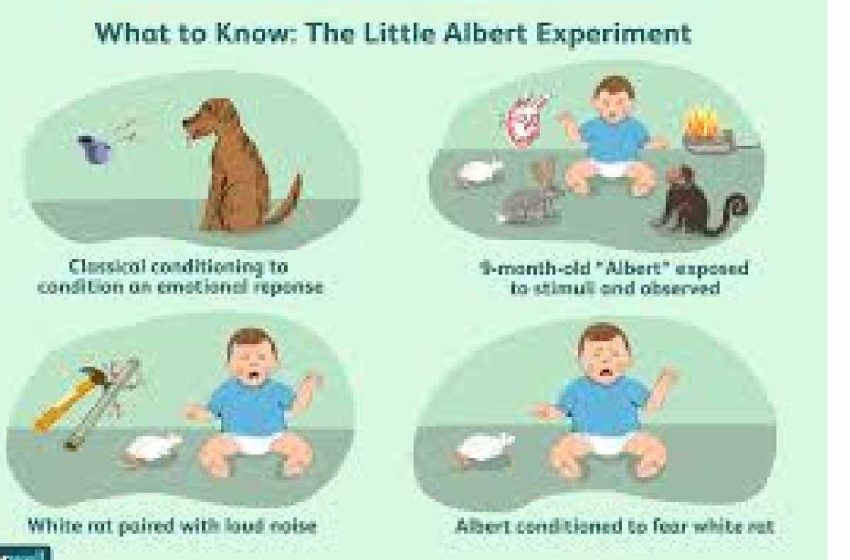
“Little Albert” was the nickname for a young kid in the study.
Historians think he was around nine months old when the research kicked off.
The kid was first watched playing calm with various objects and animals.
Researchers tested his reactions to stuff like:
-
A white rat
-
Rabbits
-
Dogs
-
Masks
-
Burning newspapers
At first, Albert showed little fear toward these items.
The Main Aim of the Study
Watson and Rayner wanted to test if fear could be learned through conditioning.
Specifically, they aimed to show emotional responses weren’t always automatic or instinctive.
Instead, they thought emotions could grow through enviro experiences.
Their study zeroed in on classical conditioning.
Getting Classical Conditioning
A bell rings before food appears enough times, then the sound alone makes a dog salivate. Learning happens when two things link in the mind over time.
From watching dogs react, Ivan Pavlov gave the concept its form. A bell rang, then food followed – soon just the sound made them salivate. What he saw stuck. Learning could come from repetition, not reason. His work carved a path others later walked. Patterns emerged where none seemed to exist. Reflexes turned into lessons. The mind linked things without choice.
Barking wasn’t the point – Pavlov noticed drool came before meals when cues appeared. A bell, once meaningless, started pulling reactions like hunger triggers. Sounds shaped behavior just by repeating alongside dinner. Timing turned signals into predictors, nothing magical about it.
Over time, the sound by itself made dogs respond. A shift happened without extra triggers around. What started as nothing now sparked a reaction. Just hearing it brought change – no follow-up needed. Their behavior altered even when nothing else occurred.
Fear might be shaped through repeated associations, Watson wondered. Could early experiences twist feelings in predictable ways? A child’s reaction, perhaps, links to what came before it. Not instinct alone but moments stitched together. Repeated events build patterns without words. Emotions form even when no one explains them. Simple triggers spark complex responses later on
Little Albert study how it happened
The experiment followed a conditioning
Neutral Stimulus
Surprisingly calm, Little Albert did not react when he saw the white rat. Right away, there was no sign of hesitation or worry in his face. At that point, nothing about the animal seemed alarming to him at all.
The small creature didn’t cause any reaction at first. It simply sat there, unnoticed, doing nothing special.
Fear Takes Hold
Each time Albert reached for the rat, a sudden clanging sound erupted as scientists struck a steel rod just out of sight. The moment his fingers brushed the animal, noise exploded from behind, sharp and jarring. When he moved toward it again, the metallic crash rang once more, cutting through the quiet. Every contact brought that piercing bang, startling and abrupt. As soon as his hand neared the creature, the loud strike split the air without warning.
Out of nowhere, the noise made the child jump, eyes wide with surprise. A sudden rush of fear washed over them, heart pounding fast. That sharp blast cut through the quiet like a knife. The youngster froze, unsure what just happened. Sound that loud does strange things to small bodies.
Fear showed up the moment the sound hit – no learning needed. That’s how the noise worked, just by appearing, it brought the reaction along.
Repeat pairing step three times
Each time, the white rat appeared alongside a sudden clatter. The sound followed close behind, again and again. Over sessions, one began to pull at the nerves just like the other. A pattern formed without words being spoken. Fear showed up even when the noise stayed quiet.
Fear began tying itself to the rat in Albert’s mind, little by little. A quiet shift grew where one came to mean the other. What once felt separate now stirred together, deep below thought.
Conditioned Fear Response
Fear crept into Albert’s chest at the sight of the rat alone, long after the noise had stopped. Though at first it followed a bang, soon the creature itself was enough to freeze him mid-breath.
A small creature started reacting differently after training. It began to respond automatically when certain signals appeared.
Fear showed up each time without fail.
What Watson and Rayner Showed
The study aimed to prove several key psych ideas.
1. Emotional Responses Can Be Conditioned
One big takeaway was emotional reactions like fear could be learned.
Watson and Rayner argued fear didn’t always need to be naturally there.
Instead, experiences and associations could create emotional reactions.
This idea strongly backed behaviorist theory.
2. Human Behavior Can Be Shaped by Environment
The study backed the belief that enviro experiences heavily influence behavior.
Watson thought human development leaned hard on conditioning and learning.
He famously claimed environment could dramatically shape individuals.
3. Fear Can Spread to Similar Objects
Another key finding involved stimulus generalization.
After building fear toward the white rat, Albert also showed fear toward similar furry things.
These included:
-
Rabbits
-
Dogs
-
Fur coats
-
Santa Claus masks with white beards
This suggested conditioned fears could spread to related stimuli.
Why the Study Got So Influential
The Little Albert experiment hit hard on U.S. psychology.
It helped cement behaviorism as a dominant psych approach for much of the 20th century.
Researchers got increasingly curious about:
-
Learning processes
-
Conditioning
-
Enviro influences on behavior
Behaviorism molded education, therapy, parenting hacks, advertising, and behavioral treatment tricks.
The Study’s Link to Advertising
Funny enough, Watson later worked in advertising after leaving college teaching.
His grasp of emotional conditioning shaped marketing tricks.
Advertisers often try to create emotional links between products and positive vibes.
This idea reflects behaviorist principles about learned responses.
Ethical Messes With the Study
Today, the Little Albert experiment is seen as deeply unethical.
Modern psych standards would never let such a study fly.
Lack of Informed Consent
Modern ethics demand informed consent from participants or guardians.
Questions linger if proper consent existed.
Psychological Harm
Researchers intentionally created fear in a young kid.
This raises huge ethical flags.
Failure to Remove the Fear
One of the biggest smackdowns is Watson and Rayner apparently didn’t fully decondition Albert’s fear before the study wrapped.
The long-term emotional effects stay unknown.
Vulnerability of Child Participants
Kids are seen as vulnerable research subjects.
Modern ethics demand strong protections for minors.
How Modern Psych Changed After Studies Like This
Psych ethics in the U.S. evolved huge partly because of feud-heavy studies like Little Albert.
Modern research standards now stress:
These protections help stop abusive research practices.
Questions About Little Albert’s Real Identity
Historians have debated Little Albert’s true identity for decades.
Researchers tried to figure out who the kid was and what happened to him later.
Several theories popped up, but uncertainty sticks.
This mystery keeps fascinating psych historians.
Did the Study Prove Behaviorism Completely?
Even though influential, the study didn’t fully prove all behaviorist claims.
Later psych theories argued human behavior involves more than conditioning alone.
Modern psych recognizes the weight of:
-
Biology
-
Genetics
-
Cognition
-
Emotions
-
Social influences
Still, conditioning stays a key psych concept.
Influence on Modern Therapy
Conditioning principles shaped several therapy approaches.
For example:
These methods still get used in American mental health treatment today.
Public Fascination With the Study
The Little Albert study stays famous because it mixes:
-
Psych theory
-
Emotional impact
-
Ethical controversy
-
Historical weight
Students across the U.S. often learn about it in psych classes.
Criticism From Modern Researchers
Some modern scholars punch the study’s scientific reliability.
Criticisms include:
-
Tiny sample size
-
Lack of controls
-
Unclear observations
-
Limited follow-up data
Even with flaws, the experiment stays historically important.
The Lasting Legacy of Watson and Rayner
John B. Watson and Rosalie Rayner helped shape U.S. psych research through their work on conditioning and behaviorism.
Their Little Albert study showed how enviro experiences might influence emotional responses.
At the same time, the controversy around the experiment helped push stronger ethical protections in psych research.
Why the Study Still Matters Today
Even over a century later, the experiment keeps shaping chats about:
-
Learning
-
Fear development
-
Childhood experiences
-
Emotional conditioning
-
Research ethics
It stays one of the most talked-about studies in psych history.
Final Take
A baby named Albert took part in a study by Watson and Rayner. Fear showed up after sounds paired with rats over time. Reactions shifted when noises came each time a white rat appeared. Emotions changed because of repeated moments like that one. Learned ties formed between things seen and sounds heard together.
Out of their research came support for the idea that what people go through in life heavily influences how they act. Experiences in the world around them turned out to matter a great deal when it comes to actions and reactions. The findings lined up with behaviorists’ long-held view – environment shapes behavior more than once thought. What happens externally, not just internal thoughts, steers choices in clear ways. Moments lived, things seen, repeated exposures – all these feed into patterns of doing.
A surprise finding popped up – fear responses jumped to things that looked alike. What was practiced before now fit new shapes too.
Though widely cited across U.S. psychology, the work sparked deep ethical concerns – ones still echoed in current guidelines. What started as a landmark inquiry now shadows how studies are reviewed. Its reach grew fast, yet doubts followed just as quickly. Influence spread wide, but so did unease among scholars. Rules evolved partly because questions never fully faded. Impact remained strong, even as criticism took root early. Back then few questioned methods; today those gaps define caution. Legacy lingers, although discomfort shaped what came after.
Strange how one child still echoes through time. Not just a name in textbooks, but a turning point that changed how science treats people. A quiet warning lives inside those old lab notes – careless methods leave lasting marks.